


2026 Digital Marketing Trends That Will Shape Business Growth
Discover how the top 10 trends will shape audience engagement, AI adoption, and measurable ROI in 2026.
Consumers now discover brands through conversational search, social platforms, creators, and communities. Simultaneously, businesses must deliver personalized, compliant, and measurable experiences across every touchpoint. These shifts lie at the heart of the 2026 digital marketing trends transforming the industry.
Success now depends on moving beyond isolated tactics toward fully integrated marketing systems that align technology, data, content, and human expertise.
Key Takeaways
- Digital marketing is projected to grow at a 13.9% CAGR over the next few years, highlighting the urgency of adapting to these trends. [Globe Newswire]
- Prioritize conversational search and Search Everywhere Optimization to reach audiences wherever they seek answers.
- Video, immersive formats, and gamification now directly boost engagement and conversions, showing clear impacts on business growth.
- Leverage first-party data, privacy-compliant strategies, and marketing mix modeling to maximize targeting and ROI.
- Integrate AI as a core operating system while maintaining human oversight for strategy, bias control, and creativity.
TABLE OF CONTENTS
Top Trends Driving Digital Marketing in 2026
These 2026 digital marketing trends are shaping how brands engage audiences, optimize campaigns, and drive business results.
1. Conversational Search & SEO Visibility
Keyword-based queries are giving way to conversational prompts, while clicks are increasingly replaced by in-engine answers. Search now occurs across all platforms where people ask questions. Tools like Google AI Overviews, Bing Copilot, and other generative search experiences are redefining visibility.
In this environment, Search Everywhere Optimization (SEO 2.0) is essential, as it extends visibility beyond search engines to social platforms, AI interfaces, voice assistants, and content hubs where audiences actively seek answers.
According to GlobeNewswire, the digital marketing industry is projected to grow at a compound annual rate of approximately 13.9% in the coming years. This growth reinforces the importance of adapting SEO strategies to changing discovery patterns.
For SEO practitioners, the focus shifts from creating pages solely for keyword rankings to developing authoritative, content-centered pages that provide answers. This includes:
- Structured content supported by schema,
- Optimization for featured snippets and voice search, and
- Readiness for AI-powered answer boxes.
Zero-click scenarios are also becoming more common, as users receive answers without needing to visit a website.
Takeaway
Prioritize search intent, structure content for conversational and multimodal discovery, and evaluate performance beyond clicks using signals such as brand visibility, FAQ inclusion, and voice assistant triggers.
To learn more about SEO 2.0, check out our business guide.

2. Video Commerce Boom
Video continues to evolve from an engagement tool into a direct commerce channel. Short-form, live, and interactive formats are now closely tied to transactions, as social platforms increasingly support in-stream purchasing and shoppable experiences.
At the same time, generative AI is accelerating the production of video. Industry research indicates that advertisers are increasingly utilizing generative AI, with AI-generated content projected to account for a significant share of video advertising by 2026.
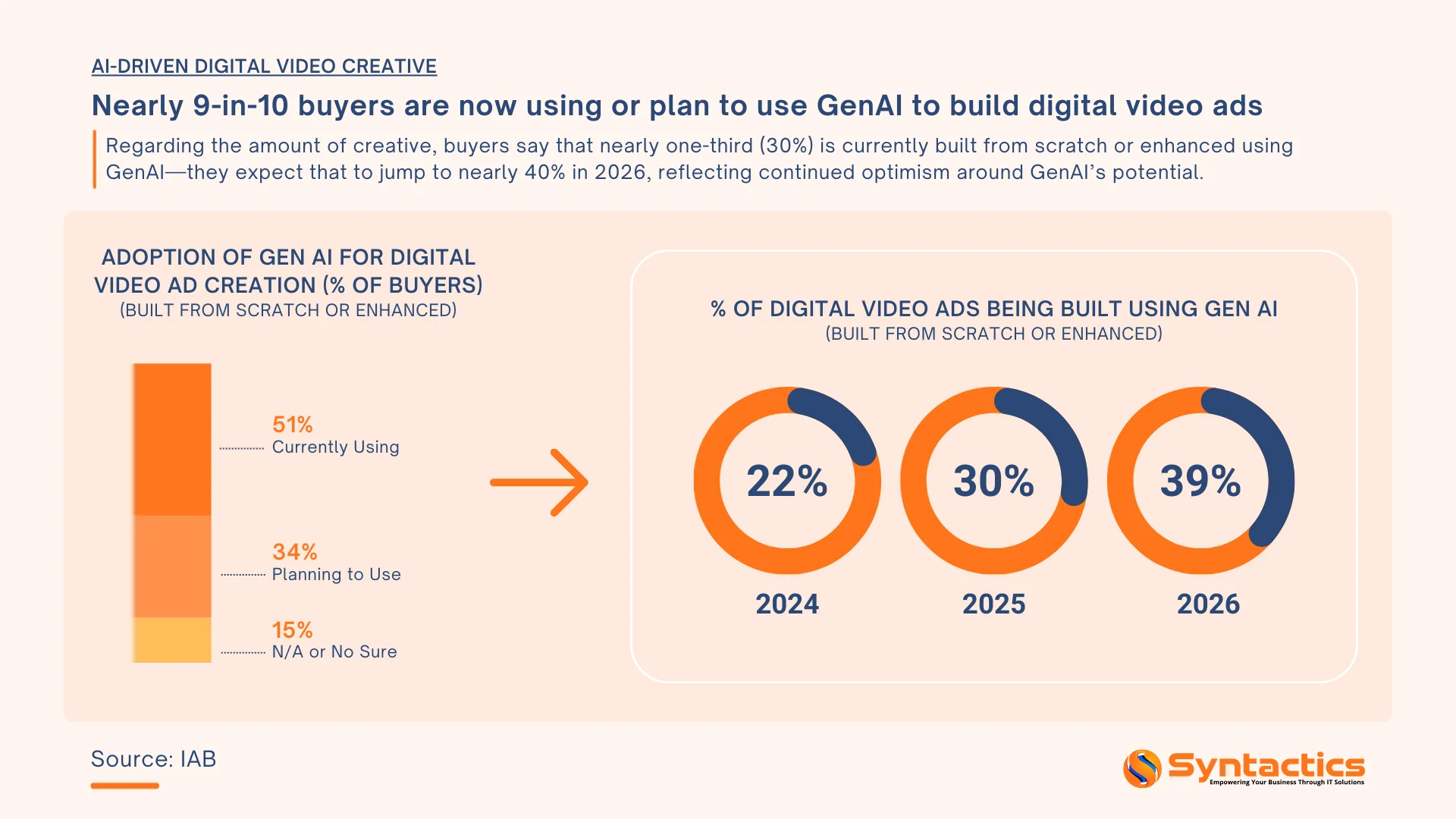
Source: IAB
Alongside this shift, social commerce revenue continues to rise through live shopping events, shoppable posts, and seamless checkout experiences built directly into platforms. These developments position video as both a discovery and conversion driver.
For brands, the opportunity lies in treating video as a pathway to purchase, rather than just storytelling. Interactive elements, product overlays, live shopping features, and ecommerce integrations help close the gap between viewing and buying.
Measurement also evolves by connecting views to meaningful actions, such as add-to-cart activity and completed purchases, rather than surface-level engagement metrics.
Takeaway
Transition video strategies from engagement-focused content to conversion-oriented experiences, supported by embedded purchase paths and full-funnel performance tracking.
3. Privacy-First Data Revolution
Data-driven marketing is entering a new phase. The decline of third-party cookies, tighter regulations, and growing consumer sensitivity around privacy are shifting attention inward. First-party data, consent-based profiling, and resilient data architecture are becoming essential to achieving a competitive advantage.
According to Reuters, global digital advertising is projected to surpass $ 1 trillion in 2025, with digital accounting for more than 73% of total ad revenue. In parallel, EMARKETER forecasts that business advertisers will allocate roughly 66% of their digital budgets to mobile.
In practice, overreliance on third-party data and open-web cookies increases risk across targeting and measurement. A stronger approach centers on building a connected data foundation that includes the following:
- Consent management,
- Customer data platforms,
- Conversion event APIs,
- Identity resolution, and
- Unified online and offline signals.
Takeaway
Position first-party data and measurement systems as growth drivers, supporting accurate targeting, attribution, and performance in line with 2026 digital marketing trends.
4. Retail Media Networks Go Mainstream
Retail Media Networks (RMNs) are moving beyond niche adoption and into the center of brand media planning. By combining first-party transaction data with premium on-site placements, RMNs offer a clear connection between media exposure and SKU-level outcomes across the funnel.
In fact, Business Insider projects RMN ad spend to reach approximately US$62 billion in 2025, representing nearly 18% of total digital media spend. That share is also expected to exceed 20% in 2026.
As a result, RMNs warrant strategic attention rather than tactical execution. Effective use involves full-funnel planning, dedicated measurement through conversion APIs and offline attribution, and close coordination with broader media investments. Brands that treat RMNs as experimental risks are falling behind those that build internal expertise early.
Takeaway
Develop a cohesive RMN strategy by aligning product data, media planning, and measurement with ecommerce, pricing, and product teams to improve return on investment.
Here’s how you can boost your online shop:

5. Creator Economy Evolves Into Co-Creation
Creator marketing continues to mature. In 2026, the focus shifts from transactional influencer posts to deeper co-creation across products, campaigns, and communities. Creators are increasingly contributing as strategic partners rather than merely serving as distribution channels.
Research from ScienceDirect shows that influencer marketing remains effective, with its strongest impact coming from long-term collaboration. Brands are involving creators in product ideation, limited-edition releases, and campaign planning, resulting in higher authenticity, stronger niche alignment, and more consistent performance compared to one-off sponsorships.
This evolution reflects a broader move toward shared ownership of brand experiences, where creative input and audience trust intersect.
Takeaway
Reposition creators as partners by integrating them into product development, marketing strategy, and performance measurement to strengthen authenticity and results.
6. Community and Authenticity as a Brand Advantage
Audience expectations continue to evolve. Beyond purchasing, consumers are increasingly seeking connection, shared values, and transparency. As a result, community-driven engagement and authentic brand expression become central to differentiation.
From an operational perspective, authenticity becomes measurable through engagement quality, community participation, retention, and referrals rather than abstract brand sentiment alone.
Takeaway
Strengthen brand equity by cultivating community, activating internal voices, and tracking authenticity through meaningful engagement and long-term participation metrics.
7. AI as a Strategic Operating System
AI is often discussed in creative terms, such as generating text, images, or video. In 2026, however, its true impact becomes apparent behind the scenes. AI increasingly functions as the operating system for marketing, supporting analytics, media optimization, workflow automation, and customer journey orchestration.
This shift is already taking shape. According to The Wall Street Journal, Meta Platforms aims to fully automate advertising using AI by the end of 2026. This will enable brands to provide inputs, such as product assets and budgets, while AI handles targeting, creative assembly, and optimization.
In parallel, Gartner highlights that marketing effectiveness increasingly depends on data structured for automated, real-time interactions.
As AI becomes embedded across planning, execution, and measurement, the focus shifts to governance, integration, and scale. However, human oversight remains critical for setting strategy, managing bias, and protecting brand integrity, while AI supports speed and efficiency across operations.
Takeaway
Position AI as a core marketing operating system by aligning workflows, data architecture, and governance models. However, build team capabilities that strike a balance between automation and strategic oversight.
8. Relearning ROI through Marketing Mix Modeling (MMM)
Measurement frameworks are also evolving. As privacy regulations, walled gardens, and cross-device behavior limit traditional attribution, marketing mix modeling is regaining importance for accurately measuring true business impact.
According to DesignRush, 90% of global digital display ad spending will happen through programmatic platforms. With media investments operating at this scale, brands increasingly rely on measurement approaches that extend beyond platform-reported performance.
As a result, open-source and enterprise MMM solutions are seeing wider adoption. These models connect media spend to outcomes such as revenue, margin, and customer lifetime value by incorporating both online and offline signals. In 2026, MMM becomes less of a periodic exercise and more of a continuous decision-support system.
Takeaway
Strengthen marketing mix modeling capabilities and align media insights with finance and analytics teams to enhance overall business performance. It’s also essential to evaluate performance using incremental lift and return on investment rather than surface-level metrics.
Find out how you can achieve higher conversions with display ads.

9. Immersive Experiences and Gamification Redefine Engagement
The line between entertainment, engagement, and commerce continues to blur. Augmented Reality (AR), Virtual Reality (VR), gamified campaigns, and live-interactive formats take marketing beyond static ads into memorable experiences.
A 2025 Deloitte Insights survey highlights how social-video platforms are shifting user behavior from passive viewing to active interaction.
Brands can drive engagement by combining AR try-ons, gamified launches, or metaverse showrooms with measurement frameworks linking interactions directly to store visits and purchases.
Takeaway
Dedicate part of your media and experience budget to immersive, interactive formats that deliver real utility and tie directly to measurable conversion outcomes.
10. Human Skills in the AI Era
Teams are the backbone of marketing success. Technology evolves quickly, but people and culture adapt more slowly. In 2026, brands that invest in training, hybrid talent, decision-making agility, and cross-disciplinary skills will have a competitive advantage.
Reports indicate that 92% of companies plan to expand AI investments and only 1% feel fully mature, with AI integrated deeply into operations to drive significant outcomes.
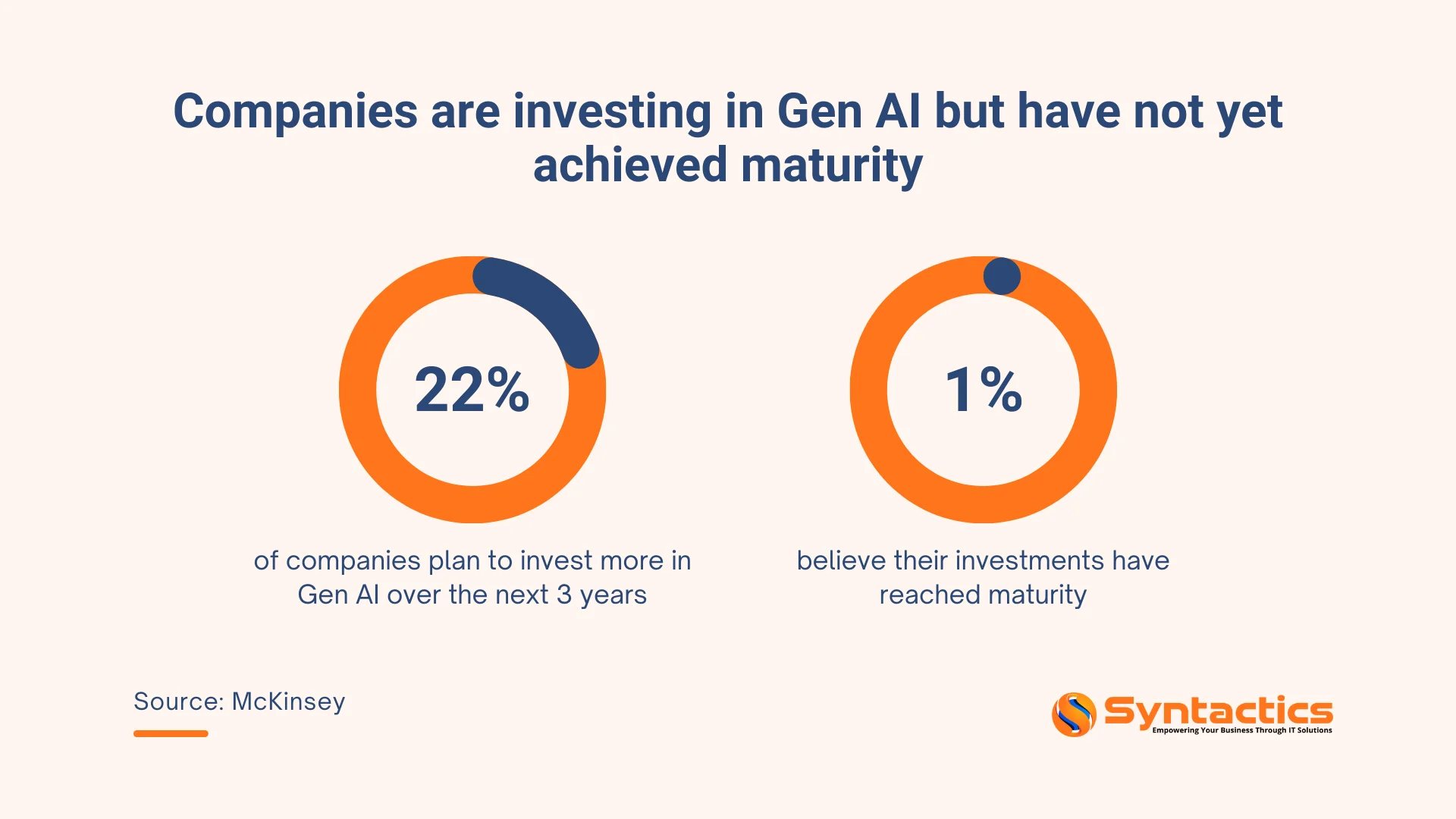
Source: McKinsey
To thrive, internal marketing capabilities should focus on three key areas: data literacy (including analytics, measurement, and first-party data), AI fluency (governing, utilizing, and scaling AI), and cross-channel orchestration across media, product, commerce, and community.
Takeaway
Prioritize talent, upskilling, and culture alongside technology and media to build a team capable of rapid learning, collaboration, and execution.
Conclusion
Integrated authority defines digital marketing in 2026. Marketers will move beyond channel silos, such as search versus social, media versus commerce, and data versus creative. Experts will also develop unified systems that integrate first-party data, foster community trust, leverage creator partnerships, and deliver measurable business impact.
Brands embracing these 2026 digital marketing trends will lead the next wave of digital marketing. Therefore, partner with trusted digital marketing services in the Philippines, such as Syntactics, Inc. We have experts to help you embed these trends into your strategy, turn insights into action, and achieve measurable growth in 2026 and beyond.
Elevate Your Brand In the Digital Landscape!

Frequently Asked Questions (FAQs)
How can small businesses compete with larger brands in 2026?
Small businesses can leverage first-party data, niche creator partnerships, localized video commerce, and community-driven strategies to deliver personalized, measurable campaigns without massive budgets. Contact our digital marketing experts for a strategy call.
Which marketing channels will see the fastest growth in 2026?
Conversational search, AI-powered platforms, video commerce, social commerce, and retail media networks are expected to grow rapidly, driving engagement and measurable ROI.
What metrics to evaluate for digital marketing performance in 2026?
Beyond clicks and impressions, businesses will track brand lift, conversions, ROI, customer lifetime value, retention, community engagement, and zero-click visibility metrics.

About Jalou Batilong
Related News:

Best A/B Testing Tools To Use for Better Conversions

How to Increase Web Traffic for Your Business Site


What is E-Invoicing Software, and Who Can Use It?




Comment 0